Our Legacy


CLW founder Leo Szilard

Nuclear physicist Leo Szilard founded Council for a Livable World in 1962 to deliver “the sweet voice of reason” about nuclear weapons to Congress, the White House, and the American public. “The policies of the great powers have consistently followed the line of least resistance, and this line leads to an unlimited arms race. I do not believe that America can be made secure by keeping ahead in such an arms race,” Szilard declared in April 1962 as he toured the country building support for the Council. “What one needs to create is not a membership organization, but a movement,” Szilard said.

Szilard fought for years to harness the power of atomic energy. In a letter prepared in 1939 for Albert Einstein, Szilard warned President Franklin Roosevelt about the possibility of atomic weaponry and urged the United States to develop these weapons before Nazi Germany could. This letter catalyzed the American government’s involvement in atomic research and led to the establishment of the Manhattan Project.

After unleashing the first controlled nuclear chain reaction and participating in the Manhattan Project, Szilard adamantly advocated against using the atomic bomb. Szilard drafted a July 1945 petition to President Harry Truman opposing the use of the bomb on moral grounds. Szilard also made a concerted effort to warn Truman about the dangers of using atomic weapons against Japan.


Szilard with Albert Einstein

In his constant quest for a method to safeguard peace, Szilard made an important realization: In order to influence American foreign policy, one must change the composition of Congress. This insight was the seed that grew into the Council for a Livable World.

Since money is needed to elect any official, Szilard believed it was necessary to find promising candidates for office and then supply them with the funds necessary to be nominated and elected. When Szilard attended the Strategy for Peace Conference in Airlie, Virginia, in October 1961, he talked to law professor and author Roger Fisher about his plans to create an arms control advocacy organization. Fisher was enthused and invited Szilard to speak at the Harvard Law School Forum.

The speech Szilard made there on November 17, 1961, marked the beginning of the Council for a Livable World. In the following weeks, Szilard repeated the speech in different cities to different college audiences. In early January 1962, Szilard was so encouraged by the response to his speech that he drew up a trust agreement and drafted bylaws to establish the organization that became the Council for a Livable World.

Over the past 50 years, many distinguished elected officials, artists, scientists, academics, military officers, authors, and activists have been affiliated with the Council for a Livable World.


Hans Bethe

  • Physicist Hans Bethe, who won the 1967 Nobel Prize in Physics for his work in solar and stellar energy, was a longtime board member. Upon his death in March 2005, the Council for a Livable World renamed its building “The Hans Bethe Center.”

  • Manhattan Project physical chemist George Kistiakowsky, a recipient of the Presidential Medal of Freedom and the Joseph Priestly Award of the American Chemical Society, became chairman of the Council for Livable World in 1977 and served in that position until he passed away in December 1982.
  • Carl Sagan, who played a leading role in the American space program, and Jerome Wiesner, who held numerous government advisory positions on science and technology, were both active board members for many years.
  • Father Robert F. Drinan, the first Roman Catholic priest to be elected to Congress, was a longtime board member and chair of Council for a Livable World's PeacePAC. In 2006, the Council established the Father Robert F. Drinan National Peace and Human Rights Award to honor individuals who exemplify the late Father Drinan's commitment to peace and human justice.
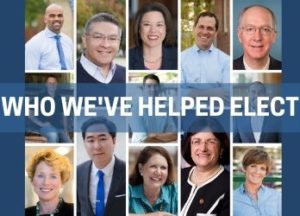
  • Click here to find out more about our legacy in Congress and who we've helped elect.

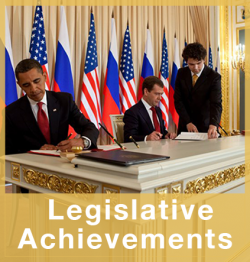
    Click here to find out more about our legacy in Congress and our legislative accomplishments.